Monday, December 11, 2006

The Armenian Question

My grandfather, who died earlier this year, was a survivor of the Armenian genocide. As a child, he escaped from Turkey with his family and spent his formative years in Marseilles, France with his mother and two siblings. In France, he organized dances, sold newspapers and became a tailor to earn money. His father finally saved enough to bring the rest of the family to America in the late 1920s.

In Philadelphia, my grandfather began a career as a tailor. He soon opened a dry cleaning location and the rest, as they say, is history. My uncles and cousins still run the operation, which has grown and changed many times over the last 75 years. During his long career, my grandfather helped bring many Armenians over from Turkey. My childhood holidays seemed like a long procession of thickly accented people thanking him, eating with him and always laughing as they pinched my cheeks.
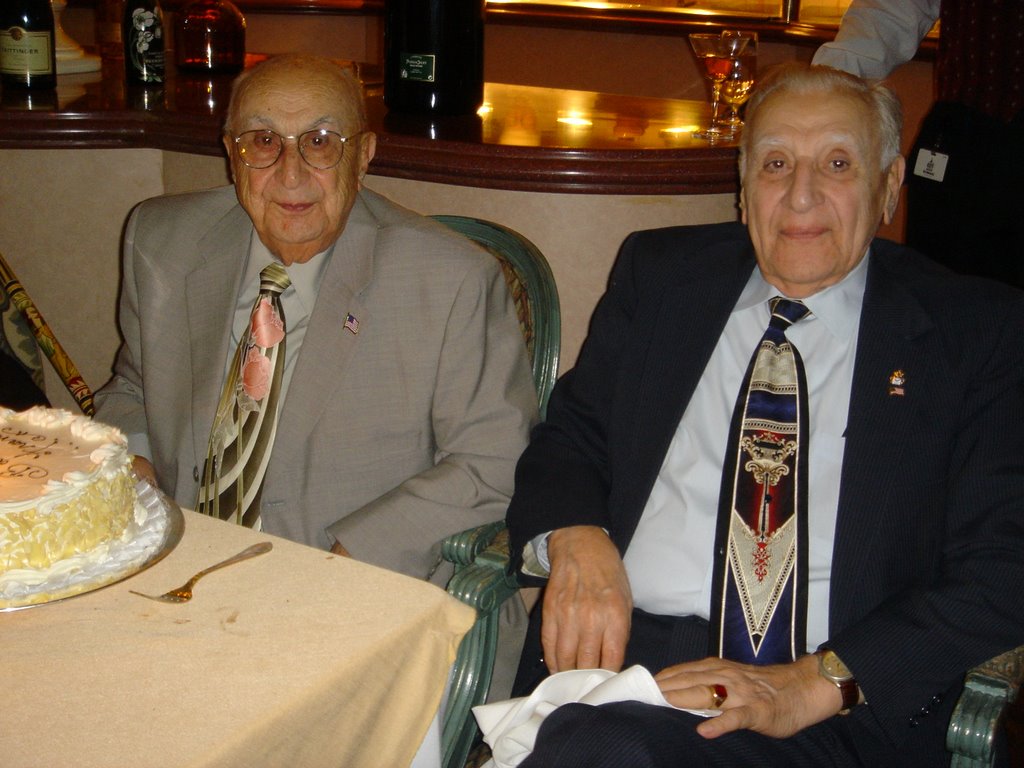
My grandpa (left) with his younger brother Clem in 2004.

When I visited him at his office in Philadelphia every year -- he worked up until the end of his life -- we used to go across the Delaware river into New Jersey for lunch with various uncles and cousins to his favorite diner. One of the highlights for him during the meal would be to speak to a Turkish busboy or waiter in their native language. He took real pleasure in these conversations. He'd turn to us after the conversation and tell us something about the waiter: "His family's from Istanbul," or "He was a lawyer in Ankara."

A few years ago, I asked him how he managed to get along so well with these Turks given the enmity that existed between them and the Armenians over the years. "You were there during the worst time," I said. He turned serious very quickly. The twinkle in his eye became a steely gaze and I worried that perhaps he was finally going to carry out his old threat of pulling my ear. "These kids don't know anything about what happened. They didn't have anything to do with that. They're trying to make a good life for themselves here."

That was his attitude in a nutshell. He was always looking towards the future. He was unwilling to put the sins of the father on the sons. He was looking for common ground, not things that divided people. The rest of my family does their best to emulate this attitude. I can't say that they are as successful as he was, but at least they try. I also do everything I can to take this lesson to heart in my own life. Heck, I even try to extend it to the Republicans I know.

This is perhaps why I read Elif Shafak's The Bastard of Istanbul with a mixture of fascination and alarm. The Armenian-Americans in this new novel don't resemble my family at all. I have always known that many, perhaps most Armenians, didn't take the same attitude as my grandfather towards the Turkish people, but to see them portrayed in such a harsh light was a shock. Shafak's Armenian-Americans have so thoroughly bonded around their hatred of the Turks that it colors their whole perception of the world. It reminded me of the Cubans in Florida, waiting for Castro to die so that they can reclaim their place in a society that doesn't really exist anymore.

Shafak has written a courageous novel that looks at the Armenian-Turkish question from many different angles. She has faced trial in Turkey for using the word genocide when referring to the -- well, genocide -- of the Armenians during World War I. The novel focuses on an Armenian-American family in San Francisco and a Turkish family in Istanbul; the two are connected when a young woman from the American family travels from San Fransisco to Istanbul. Most of the contemporary Turkish people in her novel are ignorant of the events of the past, though some have swallowed the government propaganda and accuse the Armenians of exaggeration. The Armenians who live in Istanbul have moved on from that horrific time, finding a way to survive and even thrive in the multicultural milieu of modern Turkey. It's the haunted Armenian-American characters who can't move on.

I imagine it's a true portrayal of many Armenian-Americans based on the constant stream of literature I receive in the mail from various Armenian groups. They track every utterance from the Turkish government on the genocide, pressure the U.S. Congress to force Turkey to recognize the holocaust, and always object to Turkey's possible entry into the European Union. Don't get me wrong, I'd like to see Turkey acknowledge what happened during World War I, but I have no interest in building my identity around it.

In fact, in terms of making the world aware of what happened, nothing could be better than what is occurring now. Turkey tries to prosecute its top novelists, including the Nobel Prize winner Orhan Pumuk, as well as artists and even cartoonists for mentioning the holocaust, and each time it makes world news. I sometimes wonder if Turkey did an about-face and held a ceremony honoring the slain Armenians, if everyone would just start ignoring the genocide a month later.

All of the politics seem like a theoretical exercise to me. In my everyday life, the one real issue that occasionally comes up is how should I respond to a Turkish immigrant. Do I identify myself as an Armenian and risk an awkward conversation? Do I stay silent and ignore the similarities of our cultures and our shared and painful history? On a recent trip to Chicago, a cab driver with a thick accent was going on about how family is the most important thing in life and you should cherish your wife, when something in how he phrased the words made me think of one of the many good-natured lectures my grandfather had delivered to me over the years. I asked him where he was from. "I'm from Turkey," he responded.

I hesitated for a moment, worried that he might be wary of me, before telling him that I was an Armenian. He turned completely around in the car, his face lit up with joy, despite the fact that our lives were in jeopardy as he careened down Michigan Avenue facing backwards. "Where did your family come from?" he asked. "Near Ankara. A town called Yozgat," I responded.

The rest of the trip flew by. He told me of his children: "Real Americans." I told him that I wanted to visit Turkey and see my grandfather's home. He said that I would love it and that the Turkish people were very friendly. I asked him where I could get the best Turkish or Armenian food in Chicago, and he lamented the lack of good Turkish cuisine in the windy city. "You know, the best food is the Lebanese place, Fattoush, a few miles from here. They have everything."

Sure, I could have kept my mouth shut when he told me that he was Turkish. Perhaps, I could have berated him for what happened in 1915. Instead, I did what I thought my grandfather would have done in the same situation. I greeted him with openess and focused on how much we had in common. We had a great conversation, and later in the week I took some colleagues out for a wonderful meal of shish kebab. My only regret is that I couldn't talk to the waiters in their native language.

Sunday, December 03, 2006

Notes from the Christmas Front

The Misunderstood Jew?
Christmas is just three weeks away and Jesus is nowhere to be found on the retail floor. Sure, it's all very friendly and polite at this point. The clerks are still energetic and the customers are in high spirits because they are finding almost everything they want. Still, even though a Christian spirt of brotherhood prevails, I wonder what any of this shopping mania has to do with a religious holiday.

In the past, I would have rolled my eyes at the thought of a retail Jesus, but I just spent four days among theologians, seminary students, and professors at the Academy of American Religion and Society of Biblical Literature Annual meeting in Washington, D.C. Trust me, there is a lot of money to be made in selling Jesus. I don't mean the kitsch Christ or the politically co-opted savior. I'm talking about the serious pursuit of trying to decipher Jesus' teachings and his times.

I worked in the HarperSanFrancisco booth for the event, and there was a fully stocked section of Jesus books. One was Ben Witherington's What Have They Done to Jesus?: Beyond Strange Theories and Bad History -- Why We can Trust the Bible. Of course, Witherington's HarperSanFrancisco stable mate, Misquoting Jesus: The Story Behind Who Changed the Bible and Why (by Bart Ehrman), might prove a useful retort, making the point that putting our faith in the veracity of the bible might not be a great idea.

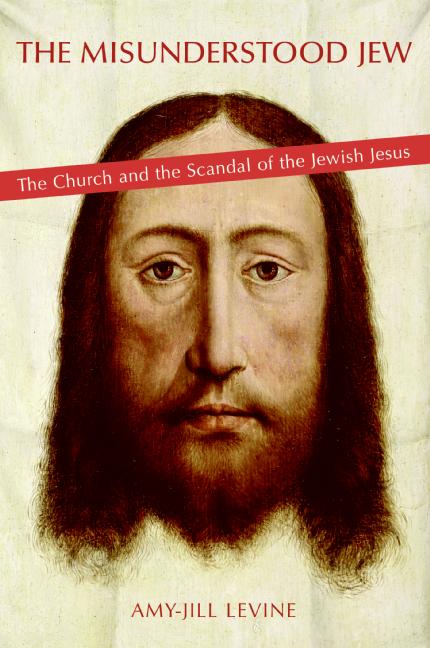
We also sold Marcus Borg's new biography of Christ, if you can call any book about Jesus a true biography, titled Jesus: Uncovering the Life, Teachings and Relevance of a Religious Revolutionary. But the surprise hit of the meeting for us was The Misunderstood Jew: The Church and the Scandal of the Jewish Jesus by Amy-Jill Levine. It would be an exaggeration to say there was a Harry Potter-like excitment around these books, but The Misunderstood Jew did acheive a level a devotion usually reserved for Lemony Snickett or Kurt Vonnegutt.

When I returned to the store, I can honestly say that with the possible exception of Misquoting Jesus, which came out last year and was helped immensely by Ehrman's humorous but informative appearance on the Daily Show, these books didn't even register a blip on the consciousness of our customers. Yes, it is true that Buddhism seems to be Boulder's dominant religion, at least as far a book buying is concerned, but I know there also is a large Christian community here. My wife has shepherded me into a few different churches, and they are always packed during the holidays. By the way, my advice for people getting dragged to church a couple of times a year is to get the person dragging you to opt for Palm Sunday over Easter Sunday. It's much less crowded and the sermon is less predictable.

The one thing in short supply at the AAR/SBL Annual Meeting seemed to be books on Satan. I had one customer in Washington ask me if there were any HarperSanFrancisco books on Satan's evil. I jokingly replied, "No, but we've got a few on the good Satan." Not getting the joke, he perked up and asked me where they were. Now, a book on the positive qualities of the Devil might be something we can sell at both next year's AAR/SBL show as well as in the store as a fun little Christmas gift.


What are the Big Books?

The other day I was lamenting the fact that it was now December and it was impossible to tell what books were really going to take off during the holiday season. One of my assistants, who has worked on and off with me for 10 years, told me I say the same thing at the same time every year. Maybe so. But in a year that seemed so loaded with big fall titles, it seems distressing that none of them have captured the public's imagination.

I thought we'd be selling Charles Frazier's 13 Moons like crazy by now. Barack Obama's Audacity of Hope is strong, but it's no Marley and Me. In fact, Marley and Me, which has been re-issued in a slow-moving, fancy illustrated edition, is certainly no Marley and Me. Jimmy Carter's new book, Palestine Peace Not Apartheid, is selling steadily, but it's hard to believe it will come close to equalling his much more universal bestseller from last year, Our Endangered Values.

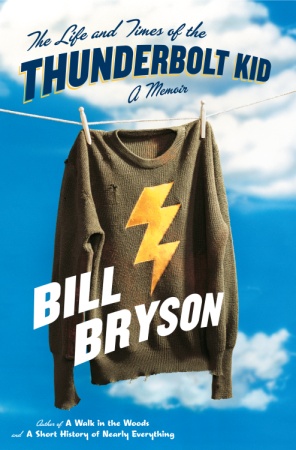
I'm personally keeping my fingers crossed for Annie Liebovitz's A Photographers Life 1990-2005 because it's an absolutely magnificent book by an orginal artist that deserves widespread distribution and is truly a bargain for $75. I would also like to see Bill Bryson's memoir, The Life and Times of the Thunderbolt Kid, take off because the more of Bryson's humor that there is out in the world, the better off we will all be.


What's Out

There are a few books that we, and everybody else from what I can tell, are having a difficult time keeping in stock. A few of them, oddly enough, are titles that if not anti-religious are at least irreligious. The God Delusion by Richard Dawkins finally came back in after a hiatus of a couple of weeks. Dawkins, a heralded Oxford scientist, takes aim at most religions in a fairly scornful manner that makes Sam Harris' two books Letter to a Christian Nation and The End of Faith seem fairly tolerant of religious views. Surprisingly, all three are selling so well that we are having trouble stocking them. Interesting presents to put under the tree.

This year's Man Booker prizewinner, The Inheritance of Loss by Kiran Desai, has been out of stock with the publisher, Grove Press, since it won the award. We snagged enough copies for it to make our bestseller list last month, but now we are just waiting for the reprint. While I can forgive Grove Press for coming up short on Desai's surprise hit, I find it hard to feel warm toward McSweeney's for running out of Dave Eggers' What is the What. McSweeney's puts out wonderful books, but they don't seem to have a clue about the business of publishing. How can you run out of Eggers' book in less than four weeks? Isn't this their cash cow? On the children's side, the delightful picture book The Library Lion by Michelle Knudsen and illustrated by Kevin Hawkes is gone until after Christmas. Oh well, there's always Doctor Seuss.

Monday, November 13, 2006

The Joys of Cruddy Old Books

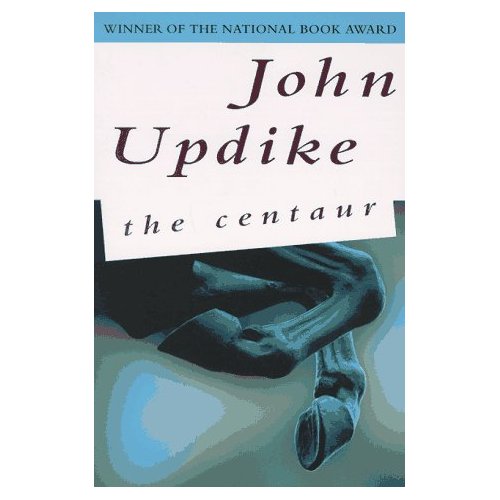
Last night when I finished reading my beat-up copy of John Updike's The Centaur, the winner of the 1964 National Book Award, the front cover was torn at both the bottom and the top along the spine, the paper was browning around the edges, turning each page into a sepia-toned document that Ken Burns would love, and the residue from an old price sticker on the back had turned black.

Most of the damage had been inflicted on the mass market paperback long before I came across it a couple of weeks ago in Myopic Books, the magnificent, multi-storied used book store in Chicago's Wicker Park neighborhood. Still, I was thrilled to find a copy of The Centaur in any condition stuck in the labyrinthine stacks. You see, about three years ago I embarked on a bizarre project to read all of John Updike's novels in the order they were written until I caught up to the present day or got sick of them. It was time for my yearly Updike fix.

I do things like this. I get an author in my teeth and I just won't let go. I've read virtually all of the novels by Philip Roth, Joyce Carol Oates, Reynolds Price, I.B. Singer and Bernard Malamud over the years. After I graduated from college, I was struggling with the basic question of what to read. I was bouncing around from one hokey title to the next. I'd read a mystery one week, a comedy the next. It wasn't very satisfying. I took a weekend trip back to my school and spoke to one of my old English professors about it and he said, "Find something you like and read everything you can by that author until you've had your fill."

Suddenly, the world of literature opened up to me again. I started going through authors like crazy. Julian Barnes grabbed my attention for awhile, then I switched to E.L. Doctorow before discovering T.C. Boyle. It worked well for many years. Now that I am the buyer for a book store, it's hard to do because of the enormous amount of pressure to constantly read new books. You just can't afford to get sucked into an author's backlist for weeks at a time.

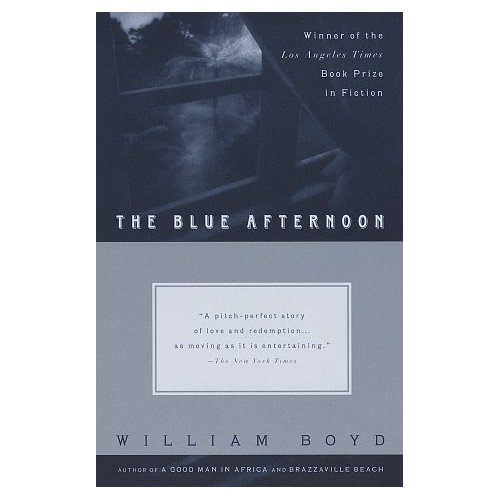
At the Mountain & Plains trade show a couple of months ago, I was talking to a fellow book buyer, and we were both extolling the virtures of William Boyd's new novel Reckless. I mentioned how much I also enjoyed Boyd's novel Blue Afternoon and recommended that she read it. She said, "I never read back. I always read ahead. There's no time to go back and read it once it's out. It's over by then." Her comments made me feel a bit guilty because I'm not as diligent a reader of new books. It also made me sad: reading is such a personal pleasure for me. I can't totally subsume it within my job.

I've learned to parcel out my favorite authors slowly over the course of the year. I read Wodehouse in the summer, Updike in the fall, Bellow (the greatest Jewish-American writer) at Christmas-time and Alice Munro's stories are for the interstices amidst the larger books. Spreading the books out like this has made the search for these titles all the more pleasurable.

I know that I could just go online and buy a copy of Updike's next novel for a buck, or even ask my sales rep for a free copy, but I prefer to haunt the used bookstores in city after city looking for one. My standards are pretty low. I won't accept highlighting or writing, and I want something that will hold together for at least one more reading -- that's it. I'm willing to wait. Last year, I never found The Centaur, and was forced to read his next novel, Of the Farm, instead.

My reading habits make me wonder about the customers I see in our store day after day. So many of them seem driven to find one particular book. It's almost always a brand new book with a slick marketing campaign. Often, they come in holding a clipping from a magazine or from the web. Several times a day we hear the magic words, "I heard it on NPR." Of course, the ultimate example of this in the book business is the Oprah Book Club. I can't tell you how many people raved about Janet Fitch's White Oleander when it was an Oprah selection. Now, we can't give her second book away. The publisher of Fitch's Paint in Black is already offering stores a rebate in the hopes that they will put it on the sale table for Christmas. I wonder what all these customers are missing by drowning out their own reading muse with the endless cacophony of media hype.

Back to The Centaur for a moment. What a magnificent novel. The opening chapter, about 50 pages long, is surreal. The lead character, a teacher named George Caldwell, is struck in the ankle by an arrow shot by an unruly student. He hobbles out on all four legs (he is a mythical creature after all) to the mechanic next door, who takes out the arrow and sends him back to school dripping blood on the ground. Once he's back in class, he teaches the history of life on earth from the Big Bang to the evolution of humans in one quick lesson. During the lesson, he has to discipline a student by cracking him on the back with the shaft of the arrow. The boy-creature's offense was that he was sexually mounting another student. All of this occurs while the lecherous school principal is doing Caldwell's monthly evaluation at the same time as fondling a female student.

After that opening, the novel settles down into an extremely realistic rendering of two days in the life of the teacher and his son in 1947 rural Pennsylvania. Caldwell gets written up for striking the student, everyone goes back to having two legs and the mythical allusions are harder to spot. We see the father and son dealing with small hardships: their car breaks down, they are stranded in a snowstorm and a painful tooth must be extracted -- trivialities that certainly wouldn't interest Zeus, or even a more minor deity.

Updike's language, as always, is impeccable. His descriptions, particularly those of nature and of people, are both quirky and dead on. He can imbue the image of the shadow of a falling snowflake with tension. His characters are sympathetic and often hilarious. The teacher, who has survived the Great Depression only to succumb to every neurosis the modern world has invented, is a wholly original man. He's fighting his own inner demons and constantly gnawing on his own perceived inadquacies while still fulfilling his role as father, teacher and bread-winner.

The New York Times ran a review in 1963 that was lukewarm at best. I think the reviewer might have been just a little old fashioned judging from his last line: "One other aspect of The Centaur must be pointed out. It contains numerous obscenities, no more loathsome than in many recent novels, but entirely unnecessary." You can view the whole review at http://www.nytimes.com/books/97/04/06/lifetimes/updike-r-centaur.html

Now, I'm on the prowl for a beat-up copy of Couples, Updike's novel from 1968. In the meantime, I've got the new collection of Alice Munro stories, The View from Castle Rock, to keep me occupied. I want to read it before my guilt gets the better of me, and I pick up some pristine advance reader's copy of a must-read novel that won't be half as good as a dozen cruddy old books I could discover in the tight aisles of an unkempt used book store.

Monday, November 06, 2006

Have I Got a Deal For You

The book business sometimes forgets that it's a business. It likes to dress itself up in the robes of educated and idealistic sophistication. Publishers host dinners for authors and booksellers at swanky restaurants with private rooms and plenty of excellent wine. Booksellers love to discuss an author's writing style and the importance of weighty ideas when touting their recommendations for the next season. We talk about that book that's going to change the world and the importance of freedom of speech. It's enough to make a guy like me forget that I'm in the business of selling, not worshipping, books.

Then there is CIROBE (Chicago International Remainder & Overstock Book Exposition). CIROBE is a week-long feeding frenzy of buying and selling sale books. It's all about wheeling and dealing; there's no such thing as a set price. Sometimes, sales people take you behind the curtain in the back of the booth to see the secret stash of a title that they can get you because you're such a valued customer. It's enough to make a used car salesman blush. No one cares about the writing or the ideas in a book. How many can you sell? That's all that matters.

I love it. Sure it makes me dizzy, and for at least a week afterwards I am still seeing parades of book covers in my dreams, but it is capitalism in its purist form in the book business. The thrill of finding a key title on sale for just $2.00 is enough to make my hands shake. All those beautiful cookbooks -- the ones we could never sell at $40 -- now available for $12.98. Just the thought of it makes me salivate.

Here are some notes and random thoughts from my week in sale book heaven:


  • CIROBE is held every year at the Chicago Hilton Towers. This is the Hilton's flagship hotel, and it is so ostentatious that it makes Paris (that's Paris Hilton) look demure by comparison. The huge ballroom features a painted ceiling, a ton of molding, gaudy chandeliers and plays host to a black-tie event nearly every Friday and Saturday night. Often, there's live classical music in the second-floor lobby. It's a very strange setting for a group of people (remainder sellers and buyers) that think wearing a corduroy sports jacket is the height of fashion. The promoters of CIROBE must know this because the show is always booked into two relatively dingy basement rooms that wouldn't suit Eloise at all.
  • The exposition opens at Friday noon, but if you don't arrive by Wednesday morning you'll miss most of the books. About two dozen vendors start selling books in breakout rooms, hotel suites and even -- in one case -- the hallway. When I arrived in Chicago on Tuesday, I immediately headed for the Powell's store located a block from the hotel. I made my way into the cave-like basement and was met by a representative from Powell's wholesale operation, as well as by a couple of reps from the remainder company Texas Bookman. It's a good thing I showed up early. I immediately bought every copy of The Places in Between by Rory Stewart. By the time I left, there were buyers from three other stores in the cave.
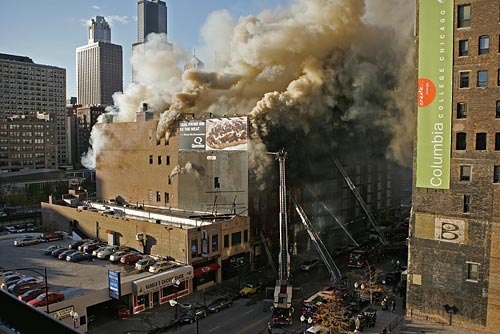
  • When I left Powell's, I was greeted by a huge fire just three blocks away. The vacant six-story Dexter building, designed by Louis Sullivan, was spitting flames and a plume of dense black smoke. All week long, whenever you entered someone's room, they would show you their view of the fire. It worked out well for me. For the sixth straight year, I didn't have a lakeside view, but I had a great angle on that fire. It took nearly 24 hours with three fire hoses to calm the blaze.
    • When is it acceptable to cross a picket line? That's a tough question, but one that I'm forced to contend with every CIROBE. In addition to the sellers in the Hilton, several vendors set up down the block in the perpetually picketed Congress Hotel. Three years ago, there was a group of 30 people on the line with signs. This year there were two to five people manning the line. I've stayed away from the Congress the last few years, and have given the strikers some money for the cause. This year I was kind of fed up. Obviously, the strike hasn't worked. The hotel is still open, and the picketers don't have jobs. Fellow booksellers told me how to avoid the picketers by going in a side door, but somehow I felt that was worse than just going in. I steeled myself for compromising my values on Wednesday afternoon, but when I got to the Congress, all the strikers were on a break. There was an orphaned sign, but no picketers.
    • For the last few years, CIROBE has been a bit of a struggle because so many vendors are selling on the web. It's been hard to find new and unique titles. This year was a refreshing change. I couldn't believe some of the titles and authors that were available, including Team of Rivals by Doris Kearns Goodwin, Glass Castle by Jeanette Walls, Dress Your Family in Corduroy and Denim by David Sedaris and Eats, Shoots and Leaves by Lynne Truss. Also, I was able to snag many of Christopher Moore's and Philippa Gregory's titles as well as several beautiful cookbooks. Of course, with CIROBE there's always a chance that a high percentage of your most anticipated titles won't even show up. I won't say it's a bait-and-switch, only because there's no switch. They bait you into placing an order with the amazing titles, and then somehow the titles are all sold out when it comes time to ship the books. You're left with the odds and ends. I'm keeping my fingers crossed this year.

    The books from CIROBE are just now starting to arrive at the store. Each day brings a new delivery and with it the expectation of a great deal for the customers. I rip open those packing lists and the memories of the search are fresh in my mind. I try to explain to the staff how great it is that I was able to get 100 copies of the Stick it to Bush bumper stickers for close to nothing and I usually get a look that says, "Where in the world are we going to put these?"

    The first few years I went to the show, I was filled with paranoia. I was sure that I was always missing the great books. My order was too late, or I didn't go to the right booth. Other booksellers will always tell you about the great books they ordered, and you can't believe you missed the title that they're bragging about. It can be an angst filled week. Now, I realize it's about the books that you got, not the ones that got away. If I could only get the lakefront view, CIROBE would be the perfect week.

    Sunday, October 15, 2006

    Too Many Books

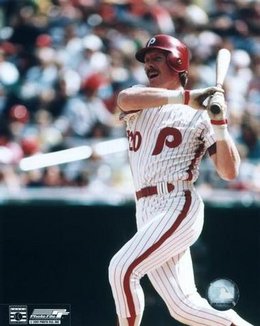
    Free books! Who doesn't love that? This is one of the greatest perks of buying books for a living. If I were a congressman, I'd be up before the ethics committee every day explaining how these gifts from the publishers and their reps don't influence my decison-making process. After 9/11, I casually mentioned to a handful of reps that I was finding solace in contemporary poetry. Within a few months, I received two dozen volumes of new verse. My love of baseball is no secret. I keep autographed baseballs from Joe Torre and the Phillies great Mike Schmidt on my desk, so it's no surprise each month when the latest baseball biographies, histories, and statistical analyses arrive.

    It's a small slice of heaven for me. I used to dream about an endless torrent of books when I wandered through the local library as a kid. I envisioned myself doing the crawl stroke through a lake of books. Inevitably, my intellectual longings far outweigh my ability to actually read all these books. Close to 200 books languish in piles stacked on the floor of my bedroom. I swear I'm going to read them any day now.

    I thought it would be interesting to pluck some of these books out of the piles, dust them off, examine why I wanted to read them in the first place, and maybe figure out why I haven't read them yet. When I told my wife about this idea, she said with unabashed enthusiasm, "Then you'll be able to get rid of them." I looked across the dinner table at her and said, "No, I hadn't thought about that. I figured I'd just put them back over by my side of the bed." That was met with a bemused grin, so I added, "I might rearrange them."

    Here are some of the books gathering dust right now:

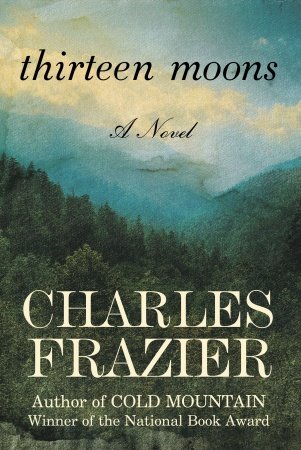
    Thirteen Moons by Charles Frazier. Random House held a wonderful dinner at the Book Expo in Washington D.C. back in May where I got a chance to meet and talk to Frazier about this book. After my conversation with him, it was the book I was most anticipating. When the meal was over, everyone was given a gift bag with an autographed reader's copy of Thirteen Moons. We were told the books were given out exclusively at the dinner and weren't available anywhere else.

    A few months later, my rep asked me if I'd read it yet. "Are you kidding me? I'm scared to touch it," I responded. "How much is it worth? They only printed a couple hundred copies, and he autographed it, for God's sake." She laughed and told me that it was probably even more valuable than I realized since some changes had been made to the text after the Book Expo.

    I've got a hardback copy now, and I've read the first 15 pages -- twice. Somehow, it's not connecting with me. Perhaps, Cold Mountain was his masterpiece, and Thirteen Moons is his ponderous second novel. Perhaps the moment of peak anticipaton is gone forever. I'll give it another shot when I've got enough time to read at least the first 50 pages at once.

    The Long Tail: Why the Future of Business is Selling Less of More by Chris Anderson. The main idea in this book both intrigues and scares me: selling small amounts of a vast array of products is the path to future success. I'm the head buyer of a physical store with limited capacity. Unlike Amazon, we just can't have a book sitting on our shelf if its sales ranking is 1,000,000. The store would be as covered in books as my bedroom, and the business office would want my head because of our unpaid bills. Anderson's premise just depresses me. All books aren't created equal. There aren't 1,000,000 books that deserve to be sold, in my humble opinion.

    Like so many other business and political books, this topic probably doesn't deserve to be more than a magazine article. How can you get 250 pages on this? I'm actually wavering on the validity of the entire idea. Selling 100 copies of Bob Woodward's State of Denial made last week a whole lot more profitable than all the one-book special orders of the previous month. It's easier to win this argument with Anderson if I don't read the book.

    Scar Tissue by Charles Wright. I love Wright's poetry. I can't claim to always understand it, but his way with language and the amout of "aha" moments I experience reading his dense verse makes the effort worthwhile. He is unafraid to tackle major topics like life and death, God and time head-on when many other contemporary poets skirt around these issues.

    This book got a somewhat flippant review in the New York Times Book Review last month. That's nothing new, because most critics and readers, including myself, find it so hard to muddle through contemporary poetry, let alone discuss it with any intelligence. What was unexpected, however, was the response from Franz Wright, the Pulitzer Prize-winning poet of 2004.

    Here's my favorite line from his letter to the editor: "I cannot bring myself to believe that I am the only serious follower of contemporary poetry who is getting sick of reading reviews by nonentities posing as Randall Jarrell, and with cheap and superficial sarcasm standing in for genuine wit quoting out of context and generally manipulating the work of a master like Wright for the purpose of proving some artistic or prosodic theory of their own, usually one that has little or nothing to do with the book under discussion."

    Wow. That's an 81-word sentence that mentions a largely forgotten -- at least to most readers -- mid-century critic in passing and uses the word "prosodic," which, by the way, means the study of the metrical structure of verse. I'm not sure if Franz Wright proved his point or the reviewer's point, but it sure made great reading.

    Last Notes and other stories by Tamas Dobozy. Dobozy is of Hungarian descent, and this book is compared to Aleksandar Hemon's stories. I thought Hemon's novel Nowhere Man was one of the funniest, most creative books I've read in the last 10 years.

    My wife and I read the first story in Dobozy's collection "Into the Ring," out loud together. It wasn't a romantic experience. It's a bizarre tale about a husband and wife who literally get into the boxing ring together. The wife is a real bruiser, which is a good thing, since they box even when she's pregnant. It was somewhat humorous, but didn't quite work for us as satire. The Eastern European flavor that makes Hemon's books so delightful was played down. I might go back to it, but I think I need more Hungarians and less fighters.

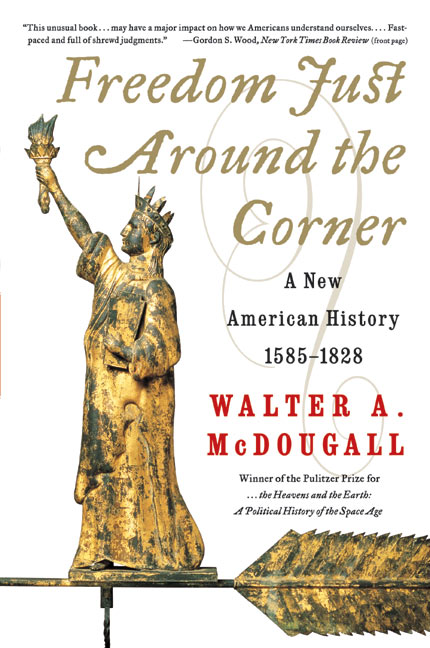
    The Scratch of a Pen: 1763 and the Transformation of North America by Colin G. Calloway. I was all set to read this pithy history about the end of the French and Indian War and the conseqences for the colonialist and the Native Americans when Freedom Just Around the Corner by Walther McDougall caught my eye after sitting in the pile for two years. McDougall's book covers almost 250 years of American history, compared to one year in Calloway's book, and it was only three times as long. Needless to say, after spending two weeks with McDougall's colorful history, I haven't had the heart to read more American history.


    McDougall's premise that we are a nation of scoundrels and schemers proved very entertaining. I particularly enjoyed that American hucksterism was treated as a positive quality. Hey, everyone wants the best deal they can get. Also, my hunch that "freedom just around the corner," was a lyric from a Bob Dylan song turned out to be correct. Who names a serious history book after a line from the song "Jokerman?" Somehow, it's perfect. Dylan himself is like a grizzled piece of Americana. As for Scratch of a Pen, there is always next year. Like one of my sales reps says about classical music, "this year it's 243 years old, next year it will be 244 years old. What's the difference? People will still listen." The year 1763 isn't going anywhere.

    Well, there are still more than 190 books in the piles unaccounted for. I'm not sure that I'm swimming in the sea of literature like I used to dream about; it's more like I'm drowning beneath a swamp of ideas and stories.

    Sunday, October 08, 2006

    List Mania

    I stumbled over Time magazine's list of the 100 best English-language novels from 1923 to the present the other day, and I was a little disappointed. I'm a list guy. I eat these things up. Whether it's a list of the 100 best outfielders in baseball history or the 100 best living songwriters doesn't matter. If it is a list, then I'm arguing with it and making up my own alternative grouping. I've been keeping my own favorite novels list ever since the Modern Library came out with their rankings seven years ago.

    The most surprising and disappointing aspect of the Time's list was how it was put together. Two critics, Lev Grossman and Richard Lacayo, picked all of the books themselves. They each made an initial list and had about 80 books in common, so those all went on the final list. Then, they just divided up the remaining spots between them. I mean, this sounds like a good method if you're 17, stoned with your best buddy and trying to come up with the greatest rock guitar licks of all time. But to present this list as the "best" novels for a publication as widely read as Time seems a little slack. With only two men makng the choices, there will inevitably be novels left off because neither had read them, and some titles included based just on one opinion. Perhaps this is why I'm just hearing about this list now. It was originally presented in 2005.

    I was also disappointed that Grossman and Lacayo didn't have the gumption to rank the novels. There's a big difference between number one and number 100. It would have been interesting to see a top 10 without James Joyce in it. Joyce nabbed two of the top three spots on the Modern Library list. Time chose 1923 as a start date because that was when the magazine -- and the world as we know it -- began. But hey, is it any less arbitrary than 1900?


    There were a few things, however, (including the fact that I have actually read 40 of their picks) that delighted me. Included on the list were: The Assistant by Bernard Malamud, one of my all-time favorite novels; Atonement by Ian McEwan, the second-best novel of the 21st century that I've read; Carson McCullers' The Heart is a Lonely Hunter, a perfect little gem of southern literature; and the right graphic novel, The Watchmen by Alan Moore and Dave Gibbons.

    I also like the diversity of the selections. African-American women authors like Zora Neale Hurston and Toni Morrison found their way onto the list, as well as a plethora of Jewish males, including Philip Roth, Henry Roth, Malamud and Saul Bellow. Science fiction masters Philip K. Dick and Neal Stephenson are present, along with the old British stalwarts Robert Graves and Evelyn Waugh.

    Perhaps, Grossman and Lacayo were right to leave out the committee and keep in some esoteric picks. Plus, you can read Time's original reviews of most of the novels. You can view the list and reviews at http://www.time.com/time/2005/100books/the_complete_list.html.

    I thought I'd stick my neck out and list my 20 favorite English-language novels since 1900. I make no claims that they are the best, just my favorites.

    Great Gatsby by F. Scott Fitzgerald.
    Catcher in the Rye by J.D. Salinger.
    Color Purple by Alice Walker.
    Sound and the Fury by William Faulkner.
    Lolita by Vladimir Nabokov.
    As I Lay Dying by William Faulkner.
    Native Son by Richard Wright.
    Ragtime by E.L. Doctorow.
    You Must Remember This by Joyce Carol Oates.
    The Assistant by Bernard Malamud
    Fixer by Bernard Malamud.
    Thousand Acres by Jane Smiley.
    Portnoy’s Complaint by Philip Roth.
    Surface of the Earth by Reynolds Price.
    1984 by Geogre Orwell.
    I, Claudius by Robert Graves.
    One Flew Over the Cuckoo’s Nest by Ken Kesey
    Heart of Darkness by Joseph Conrad
    Any Human Heart by William Boyd
    The Adventures of Augie March by Saul Bellow

    No, they aren't ranked either. My list of 100 is segmented into five groups of 20, that I haven't had the heart to rank. Of course, if Time magazine was going to publish my list, I'd come up with some numbers.

    And just for the record, the greatest rock guitar lick for my money is Richard Thompson's live solo on "Can't Win" that appears on his three-disc set Watching the Dark. You don't even need to be stoned to enjoy it.

    Tuesday, October 03, 2006

    Can I Get Fries with That?

    When I'm in the mood for a lunchtime sandwich, I have to decide between two nearby cafes. My decision-making process rarely involves the type of bread or the kinds of sandwiches served. I'm a tuna fish guy, and both restaurants make a tasty, not overly mayonnaise-laden sandwich on wheat bread. I make my decision based on whether I'm in the mood for a chocolate chip cookie or potato chips. One restaurant gives you a cookie with your lunch, the other gives you a bag of chips.

    I like the extras. I want the add-ons. There are probably a dozen more places within a few blocks where I could get my tuna, but they don't have the goodies that I want. So I've narrowed my choice down to these two restaurants. I started thinking about all of this last week, while I was working at the Amy Goodman event promoting her new book, Static.

    Goodman, the host of the daily left-wing news radio show "Democracy Now," usually gets me thinking about the hypocrisy of the Bush administration, the atrocities of the Iraq war and other blood-boiling political issues. But last Tuesday night, she got me thinking about my free chips and cookies. This was because she had such a great add-on of her own. We sold an extra 60 books because of the freebie, and that had me .

    Goodman, along with her brother David, gave an impassioned presentation about the lax job the media has done in monitoring the Bush administration, the story of the mothers of slain Iraq war soldiers and why you should buy their book. They desperately want their book to reach the New York Times' bestseller list.
    They figure it's the only way the book will appear in the Times, since the Times has thus far ignored it. In addition to their great oratorical skills, they had a gimmick to help sell the book: buy two copies of Static and get an exclusive DVD that is not for sale anywhere else.

    Customers had their choice between two DVD interviews by Goodman, either Harry Belafonte or Pete Seeger. The DVDs were in simple paper sleeves and came with no art work or liner notes. About 50 people bought two books to get their free DVD. Another handful couldn't choose between the two, and decided to buy four books so they could get both interviews. Wow. It's rare to have more than a few customers buy multiple copies of a book. The Goodmans created a stampede with the bonus DVDs, and the disc must have cost less than 50 cents to produce and package. I don't know about the New York Times' list, but Static was our top-selling book for September.

    It seems like every other business does some variation on this theme, and yet we rarely do it in the book business. Tonight, the store is hosting Philippa Gregory, the author of The Other Boleyn Girl. We are anticipating strong sales, but how much stronger could they be if we had something exclusive to give away when customers purchased two or more of her books?
    Wouldn't it be great to get a signed copy of a short story that was only available on the tour? What if there was a CD featuring Gregory being interviewed?

    Once I started thinking about this, the possibilities seemed limitless. Of course, they depend on the individual author and book, but I think people would eat up this type of thing. A book is only $25, and that's not much to pay for a chance to get something by your favorite author that no one else will have.

    I'm starting to see this add-on phenomena hitting the publishing world in other ways. I am just finishing up a wonderful forthcoming novel The Dead Father's Club by Matt Haig. It is the first 2007 title that I've read. I had never heard of Haig before the sales rep showed me the book. I decided to read the book, in part, because of the extras that Viking pushed my way. My sales rep handed me a snazzy marketing piece featuring six new Viking novels that included a CD. I played the CD and heard an interesting interview with Haig. But I still wasn't convinced. About a week later, a DVD interview with Haig came. I watched it and thought I'd read at least the first 20 pages. I was hooked.

    Now that I'm tuned into these possibilities, I see missed opportunities everywhere. When I read Zadie Smith's hilarious novel On Beauty in hardback, I immediately looked for interviews with her on the internet. I found a great conversation she had with Terry Gross on NPR. It was funny, illuminating and riveting. Wouldn't it be great if a CD of that interview was bound into the paperback edition of On Beauty?

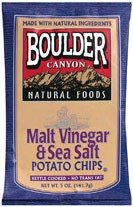
    It seems to me that if I'm willing to change my buying habits for a bag of malt vinegar potato chips, then the opportunities to convince readers to buy particular books, or more copies of certain books, are out there. After all, publishers and bookstores have a lot more varied options than just chips and cookies to used in an effort to tempt people.