Sunday, September 24, 2006

Worthless Authors

What do David Baldacci, Elizabeth Berg, Patricia Cornwell, John Grisham, Stephen King and Nora Roberts have in common? You could answer that they all write mega-bestsellers or you could say that their backlist books (their older titles) are absolutely worthless. Both answers are correct.

For years the Boulder Book Store store has struggled to sell these authors' previous books, but I blamed that on factors unique to the store and to our community. Although we sell their books used, these authors' new books aren't nearly as popular in Boulder as they are nationwide, and we don't do well with mass market paperbacks in general. So, I was surprised to find out that all of these authors, and dozens more, were truly worthless nationwide.

A few days ago, I received an email detailing "pre-shipment sorting guidelines" for a company that accepts donated books and then sells them on the internet. The proceeds are split evenly between the company and the store or library that has donated the book. Our bookstore sends them sale books we can't sell, rejects left behind in our used book buying office, and some books that we can't return to the publishers. It's a motley assortment of titles, but every month we get a check for a few hundred dollars and a list of books that have managed to sell for two or three dollars apiece on the internet.

The pre-shipment guidelines are designed to prevent the company from being inundated with unsaleable books. It saves the company time sorting through the titles and it saves money for the different libraries and organizations shipping them these books. The letter starts off innocously enough -- no damaged books, no books without ISBNs, no books written in a language that doesn't use the Latin alphabet -- but suddenly veers off into a list of popular fiction authors that are "uneconomical".

The list is a who's who of contemporary fiction.
In addition to those mentioned above, it includes such mystery stalwarts as Mary Higgins Clark, Sue Grafton and John Sandford, horror masters like Robin Cook and Dean Koontz, and sappy romance writers including Danielle Steele and Fern Michaels.

I love this list. So much of what I can't stand about publishing all compiled under the heading "popular fiction authors to avoid." I couldn't have done a better job myself. These authors' new books are foisted upon us time after time, season after season, no matter how bad they are. Instead of pushing well-written, innovative fiction, the publishers give us a huge marketing budget and a million-copy print run of the latest logorrhea from James Patterson and his team of "co-writers." It's all formula blockbusters all the time, and the publishers want to know why the independent bookstores don't sell their share of it. The answer is simple -- because we value thinking and originality.

The day before I received the email containing this list of authors, I was offered a deal from my Random House sales rep. She had a list of backlist titles that Random House was offering an extra discount on. I skimmed down the list, which was amazingly unremarkable for the biggest publisher in the business, until I came to a trio of ancient John Grisham titles. I looked up at my rep, and said, "I'm done. Does anybody sell these Grisham books at full price anymore? Who thought up this list?"


The market is flooded with these books, and the market tells us everyday: they are worthless. My only wish is that consumers would realize this when the books were brand new and pick up something different. After all, if you really need the guilty pleasure of Danielle Steele, you could just wait a few months and buy her new books for less than a buck. Amazon is currently selling her two 2006 releases for 79 and 22 cents.

Take a chance on something like David Mitchell's brilliant new novel Black, Swan, Green, or read Marisha Pessl's wildly inventive Special Topics in Calamity Physics. By the way, you won't find either Pessl or Mitchell's books listed online for pennies anytime soon. Now, if those two books headed the bestsller list, that just might force the publishers and even some of their blockbuster authors to start thinking.

Tuesday, September 19, 2006

Buying for the Kids


I never thought I'd rave on and on about a book called Tickle the Duck, but from the moment I read the sample copy in my office, I just could not get enough of the silly duck with the big belly and impish grin. It's a work of pure genius. The combination of an outrageously funny, infantile, illustrated duck and a simple plot (if a duck begging the reader not to tickled him can be considered a plot) creates endless hilarity for anyone over the age of one.

Out of desperation, I took over our store's children's buying two years ago. We'd gone through three buyers in a couple of years, and there was no one passionate about kids' books in the store willing to take on the job. I figured that at least I knew how to buy, even if all I knew about children's literature was Dr. Seuss and The Island of the Blue Dolphins. For years, I recommended Scott O'Dell's classic to anyone buying a book for a child between the ages of three and fourteen. "Oh, you've got a middle school grandson into snow boarding? Well, he will really love this book about a girl stranded on an island."

Now I finally have two assistants who should be able to do most of the children's buying, but I am having a bit of separation anxiety. Earlier this week, I was buying Penguin's winter children's list and training one of the new buyers. We attacked the box of samples like two kids opening Christmas gifts. As we leafed through the piles of books, the riot of colors, drawing styles and silly stories almost overwhelmed us. We argued, we laughed, and we marvelled at the creativity.

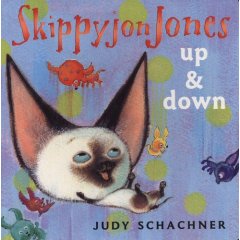
Berkely Breathed's Mars Needs Moms, a zany and almost dark story from the creator of Bloom County, was the obvious hit. I was also surprised and wowed with Cal Ripken's The Longest Season, a moving tale about the low point of his amazing baseball career, beautifully painted by Ron Mazellan. The sleeper on the list was Helen Ward's melancholy Little Moon Dog, magnificently illustrated in muted tones by Wayne Anderson. Who wouldn't love the two
Skippyjon Jones board books about the crazy Siamese cat that thinks he's a Chihuahua? By the way, who invented board books? They should get a medal, or at least a gold sticker.

By the time we sat down to buy the books, my assistant and I had read all the books on Penguin's winter list. We didn't have to wildly guess about which ones were good and which ones were all publisher hype. How long would it take to read even one percent of a major publisher's adult list? Sure, I got a little sick of the nauseatingly sentimental string of books about mommy animals with cute babies, and I wondered why half the books were being published. Okay, more than half. My assistant was flabbergasted by Penguin's outsized publishing hopes for the winter. "Why don't they publish a dozen good books and really get behind them?" she asked. Ah, the answer to that question could save a million trees.

Even looking at this single list, I was struck once again by how many talented artists are illustrating children's books. It's not easy being an artist in America, but here's a field that values excellent work and even encourages unique artistic styles. My favorite illustrator, David Catrow, had a paperback, Our Tree Named Steve, on the list. Who else in our culture would pay Catrow over and over again for his thin-necked, big-headed, wide-eyed illustrations of people and dogs?

Speaking of illustrators, I attended a breakfast featuring Jon J. Muth (Zen Shorts) and Jim LaMarche (Rainbabies) this past weekend at the Mountain & Plains tradeshow in Denver. Muth spent most of his speaking time in front of an easel. He painted with a huge chinese brush (about the size of his arm) and watercolors. With just a few strokes he made paintings of a panda, a gorilla and a stalking cat. The cat was so magnificent that LaMarche praised him loud enough for the whole room to hear. Muth's outstretched cat was so simple and yet so fluid, it reminded me of Picasso's one-line drawings of bulls.

Sometimes I wonder if we would recognize a Picasso among us. Would we value the magnificent draftsmanship? Would we marvel at the brilliant colors and the oddly shaped figures? Or would Picasso be one illustrator among 50 on a children's book list, waiting for the patient, appreciative bookseller to recommend his title? I'd like to think that Picasso would get plucked out of the massive stack of samples, even if he was illustrating a silly duck.

Wednesday, September 13, 2006

John Shors: A Gem of an Author


John Shors, the author of Beneath a Marble Sky, is hustling every day in an effort to break out his debut novel. He quit his day job in July and is now working full time to promote the paperback release of his tale about the building of the Taj Mahal. So far he has spoken to over 200 book clubs, and there is no end in sight. For most writers -- heck, for most marathoners -- this would be exhausting, but for Shors, who went through 56 drafts before pubishing his book, it appears to energize him.

At Tuesday night's Boulder Book Store discussion, he was eloquent, engaging and informative. He answered the questions with a freshness that belied how many times he has broached these subjects. Whether he was talking about his first-person narrative in the voice of a 17th-century Hindustan woman, the semi-precious stone work embedded in the seemingly white marble walls of the Taj Mahal, or his feelings about the cover art on his book, his comments were genuine and spontaneous.

It's a good thing that Shors has the energy and the skill to navigate through the messy world of readers. Beneath a Marble Sky, a Penguin paperback, is a fine novel with detailed historical scenes and a great love story. Shors brings us the sights, smells and sounds of an amazing time and place, and he also weaves together a powerful romance. It effortlessly melds into the true-to-life events that form his tension-filled plot. But all of that is not enough to sell the book.

There are a lot of interesting novels that fall by the wayside every year. Shors' work is one of hundreds of debut novels that made its appearance this summer. As a book buyer, it is bewildering to figure out which ones to buy for the store. I am constantly asking the sales reps, "What's going on with this book? Is there any special marketing?" All too often, the answer is either "not much" or "nothing." I'm looking for any publicity planned that might help the book in my market, or some advertising campaign by the publisher, or perhaps contacts the author has with a media outlet.

Often, if the author isn't going to make something happen, the book is going to die silently on the shelves of bookstores and in the warehouses of wholesalers. The publicity departments of major publishers seem to be under-staffed and completely overwhelmed as far as I can tell. They push the big titles and a handful of in-house favorites and hope that the rest will either get great reviews or spread by word of mouth. Reviews are tough to come by for Shors because the book was orignally published by a small house (McPherson Company) in hardback in 2004. Reviewers are notoriously reluctant to take on paperbacks. In order for Shors to get Penguin to rev up its marketing plans, he's got to get word-of-mouth interest going on this book.

Shors is the dream author for a publicity department. He is tireless, likable and willing to do whatever he needs to get some momentum going behind Beneath a Marble Sky. His efforts appear to be working. Sales are growing, and almost everyone left Tuesday night's book group determined to recommend his book to a friend or a husband. Here's hoping he sells enough to get on Penguin's radar. For now, he's just like one of the thousands of jewels embedded in the walls of his beloved Taj Mahal -- you have to get close enough to see his brilliance.

Friday, September 08, 2006

Priestess Does it Her Way

Ten years ago, I cringed when the words self-published were uttered in my office. These stapled or occassionally stitched-together books were often amateurish memoirs, badly constructed novels, treacly poetry or bizarre accounts of the occult. The authors weren't much better. Many were wannabe writers who scorned editing, were embittered against the publishing process that had rejected them and thought they were entitled to the royal treatment at the bookstore.

My, how times have changed. Opportunity, community and publicity are the first three things that come to mind when I see a self-published book nowadays. Many of the writers are established professionals in the community with something to say and a waiting audience. The quality of the writing has improved. A cottage industry of freelance editors and designers contributes their expertise to these projects. Also, self-published local authors often draw bigger and more passionate crowds to book signings than nationally known writers.

Thursday night's signing by Cindy Morris, of her new book Priestess Entrepreneur, is a perfect example of this changing dynamic. Morris, who owned a local flower shop for ten years and has an ebullient personality, was basically told she had no chance of getting a publisher for her book. "You are no one," an agent told Morris when she shopped her idea. Boy, was that agent wrong. Morris has a great deal to say about running a business, trusting your intuition, and how to acheive success on your own terms. As an independent business woman, she also has the credentials to back it up .

I must admit that I went to the event as a bit of a lark. My mother-in-law is in town, and I thought the book signing might provide great entertainment. I knew that music, played on a few bizarre instruments, including a monochord and a crystal ball, would be performed before the reading and that the word "priestess" in the title might bring out some of Boulder's more eccentric characters. Well, the crystal ball turned out to be a sweet-toned crystal bowl and the priestess, Morris, was eloquent, humorous and full of excellent advice.

My mother-in-law, who runs a fledgling non-profit with her husband, was extremely impressed and bought the book. She has since read half of it and is enjoying Cindy's multitude of stories and reaping the benefits of the business ancedotes already. She even commented on the book's easy-to-read layout.

To see that a sure winner like this can't find a home at a publisher makes me wonder just what else the major houses and agents are missing. I waded through hundreds of upcoming Simon & Schuster books for seven hours over the last two days and can honestly say that Morris' book was more saleable than 80 percent of them. Simon couldn't have squeezed in a book like this and taken out one of its endless array of cookie-cutter chick lit books?

Even better than banal chick lit, Simon and Schuster's March, 2007 list included a true winner: the "erotic thriller," Thong on Fire. As wonderful as this book sounds, I have a feeling that ten years ago, it would have been the self-published book and Priestess Entrepreneur would have had the backing of a major press.

Tuesday, September 05, 2006

These Comics Aren't for Kids

Six years ago, on our first day in Paris, my wife and I ducked into a bookshop. We were looking for a map, but I really wanted to check out a French bookstore. Surely, I thought, they must be high-brow and full of fabulous literature that we could never sell in America. I truly expected a whole section on Foucault, Derrida and Sartre. Instead, I was met with an endless array of comic books (graphic novels, as polite grown-ups call them). It was easier to find Tintin than Camus. A dozen adults perused the section, and I stood dumbfounded while my wife finally located a map and guided us to the Opera House, where I feared a musical production of Dumbo might be in full swing.

For the last few years, I have been told repeatedly by eager publishers that graphic novels are going to be all the rage here in America. A few even ventured that Japanese Manga was going to infest our stacks like Kudzu has taken over the South. I continually try to understand Manga and have come to three conclusions: all the characters' eyes are way too big for their faces, all the girls wear mini skirts that would have been scandalous in the 1960s, and somehow the genre must be related to Hebrew, because you read it backwards.

The predictions finally seem to be coming true. We are becoming graphic-novel crazy. My store is expanding its graphic novel section for the second time in as many years. Sure, it's still not as big as the mystery or science fiction sections, but it is growing steadily. I'm relieved to say that Manga is not leading the charge. People are interested in Persepolis, Sandman, Sin City and now, after the movie, V for Vendetta.

I have found some solace in these more traditional graphic novels. Superman and Batman were my heroes as a child. The Watchmen, Sandman and Hellblazer got me through my bachelor 20s. The other day, when I found myself holding a gift card, I thought it was time to update my collection. Like a kid on a limited allowance, I browsed through dozens of books and finally selected the first two volumes of Transmetropolitan and the opening book of Ex Machina. I was looking for characters that I could relate to, interesting art and settings that weren't too outlandish.

Spider Jerusalem, a chain-smoking, Hunter-Thompson inspired journalist, is the lead character in the dystopian future world of Transmetropolitan. He inhabits a world that no one in their right mind would want to live in. Advertisements attack people in their dreams, and even household machines have addictions in this alien-implanting society. Warren Ellis comes up with the fantastical stories, but a team of illustrators led by Darick Robertson make his wild ideas seem real.

Transmetropolitan really takes off after Ellis has established the ground rules for his insane universe. Jerusalem's job as a columnist allows him to naturally delve into all the nooks and crannies of his city. We find out about people that download their brains into a super-computer and get rid of their bodies, we visit reservations where people are voluntarily brainwashed into forgetting contemporary society and live as Aztecs, we discover the terrible fate of those cryogenetically frozen back in the 1990s. It's a mad, mad world and I love it. No traditional novel could so readily take you into the future the way Robertson's explosive drawings do.


Ex Machina won the Eisner Award (the graphic novel equivelent of the Emmy's) for "Best New Series" last year. This book is set in our world, specifically New York City, 2002. Mitchell Hundred has retired as America's first and only super hero to become the mayor of the Big Apple. An electrical accident gave him the ability to hear machines talk and he can also give them commands. He can tell a bus to stop, he can turn off all the lights in New York City, but in the end, he was only able to save one of the World Trade Center towers on Sept. 11.

Ex Machina: The First Hundred Days starts out promisingly enough, as we are given the background story, but by the end, we are left scratching our heads as to why anyone would want to be the mayor of New York. Hundred's two main crises involve an artist who has offended everyone in the city and a serial killer who is picking off the city's snow plow drivers. Who turns in their super hero tights for that? Still, Brian Vaughan has created an interesting post-9/11 world that has some real potential, and we can only hope the mayor has an opportunity to be a little more heroic.

I can't wait to dive back into the stacks and discover what the French have known all along -- graphic novels are great fun. Also, if they are well written, like Transmetropolitan, they can become a vehicle for commenting on religion, television and other sacred cows in our society. All of this has me saying, "ooh-la-la!"

Friday, September 01, 2006

The next Marley and Me?

What do you get when you cross the bestselling Marley and Me, the tear-jerking memoir by John Grogan about his dog's death, with last fall's sleeper hit A Year of Magical Thinking, Joan Didion's heartbreaking work about the death of her husband and daughter? According to HarperCollins, the answer is Mark Doty's forthcoming memoir Dog Years.


This crazy comparison game is a favorite that publishers play when they are trying to sell new titles into bookstores. When I read, "part Marley and Me, part A Year of Magical Thinking," in the catalog, I looked at my Harper rep incredulously and said, "what, the dog and his spouse die at the same time?" The rep deadpanned, "it's two dogs and a lover with AIDS." When I showed the catalog to other people in the office, we had to wonder if Harper took out an ad seeking someone who fit this profile. This is all kind of a shame for two reasons: Doty is one of our greatest poets, a truly sensitive writer, and he really went through this incredibly difficult and painful experience.

Doty's isn't the first book and certainly not the last to get the Marley and Me treatment. Harcourt pitched Thomas Healy's memoir, I Have Heard you Calling in the Night, as Marley and Me with an alcoholic. When I heard this, my colleague and I replied in unison: "The dog drinks?"

As you might have guessed, this game drives me crazy. I think it is disingenuous as a sales tactic and also a disservice to all of the books involved. I can't recall how many books were supposed to be the next Angela's Ashes. There was never another Angela's Ashes. Frank McCourt's writing style is unique, the setting is originally drawn and the emotions are brutally honest. The book was a hit because it was unlike anything else. To constantly hawk every new memoir as the next Angela's Ashes diminishes McCourt's accomplishment. Also, I can only guess how many worthwhile books got sold as another Angela's Ashes and then were quickly seen as a disappointment because they were never appreciated for what they really were.

Many books used to get compared to Pam Houston's bestselling short story collections. Pam and I are friends, and each time I saw her I would tell her of the different books being billed as "in the tradition of Cowboys are My Weakness," or "part Pam Houston and part someone else." Pam usually rolled her eyes and said, "Wow, I'm a tradition." The ironic twist to this is that Houston's latest book, the novel Sight Hound, isn't even in the Pam Houston "tradition." Unlike Houston's other books, the lead character isn't always seeking solace with difficult men, but she's in a relationship -- albeit a crazy, humorous one -- and the focus is on the love she has for her ailing dog. If it was being sold now, it would be hailed as a fictional Marley and Me, because the beloved dog dies in the end.

I realize that publishers need a quick handle to sell books -- after all, Harper was showing over 500 books to me the past two days --but I can't believe they know just how trite all of these silly comparisons sound. It's a running joke in the office. I mean, how does Harper want me to react when I see the quote about Doty's book? "Oh boy, we should buy at least a 1000 copies, if it's going to sell like Didion and Grogan's memoirs."

We read memoirs because we want a new experience, we want to meet a unique person. What we loved about Marley and Me was much more than the surface story. A great book can be about absolutely anything. Somewhere in the beginning of the book we fall for the author's voice and we trust him to take us somewhere special. When the writer fulfills that expectation, when he tell us of an experience in a voice so personal it almost feels like our own, then we have the real potential for a great book. Perhaps Marley and Me, despite having a completely different storyline and setting, was the next Angela's Ashes. I can't guess what the next Marley and Me will be, but I'm positive it won't involve a dog.

Tuesday, August 29, 2006

Do Publishers need Bookstores?


Penguin is making an end run around bookstores: their website now offers discounts directly to customers. It makes me feel like a dupe for sitting in all those sales meetings, poring over catalogs and creating marketing plans for their titles, only to see them undercut bookstores with their own website. It's one thing to compete with another bookseller, even one as big as Amazon, but to have to fight with one of your main publishers for sales is asinine.

Does it make sense for Penguin to compete with bookstores for sales? I don't think so. Most bookstores carry a vast array of Penguin books and will special order any book that their customers ask for. Many customers discover new Penguin titles from browsing bookstore shelves or looking at staff recommended sections. In fact, our next store reading group title, Beneath a Marble Sky, by John Shor, is a Penguin title. I have to wonder -- will the customers just sit at home and order directly from Penguin, now that we've brought their attention to this novel?

It seems that the main thing Penguin can offer on its website is all of its branded material. Look at that cute Penguin logo! Wouldn't you want a mug, a T-shirt, or even a baby onesy with that adorable character on it? I would. Penguin should go crazy selling those items which would help brand the company and let the booksellers do what they do best. Does Penguin really want to sell one book at a time? Do they want to deal with disgruntled customers trying to return books? Why incur the wrath of booksellers around the country for a few sales? It doesn't seem like a winning formula.

On the other hand, HarperCollins, who often encourages thinking as part of its corporate culture, directs customers from its website to the sites of other booksellers. HarperCollins is an equal opportunity linker. If you hit the buy now button on one of their titles, it will give you the choice of going to the purchasing page of 21 different booksellers. These sellers include giants like Amazon and Barnes and Nobles as well as smaller stores like Square Books in Oxford, Mississippi. Since we (The Boulder Book Store) are one of the pages that HarperCollins links to, I can honestly say that any store with a website can pretty easily join this party. That's also why I'll proudly promote http://www.harpercollins.com/.

Of course, publishing being what it is, this could all change tomorrow. But with a new buying season approaching, it's good to know who you're teammates are and just who has joined the competition.